Welcome to my blog! Please check my recent posts and enjoy.

Dot Net on Linux
Mono, an implementation of Microsoft dotNet framework on the ECMA standards for C# and the Common Language Runtime, has been around for a while and got support from a large community. With recent implements to fully support ASP.NET 2.0, ASP.NET MVC and ASP.NET AJAX, it guarantees to run smoothly C# based applications which do not heavily depend on Windows Server and MSSQL, more…
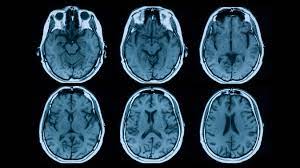
MRI- Magnetic Resonance Imaging
Magnetic resonance imaging (MRI) is a medical imaging procedure that uses strong magnetic fields and radio waves to produce cross-sectional images of organs and internal structures in the body. Because the signal detected by an MRI machine varies depending on the water content and local magnetic properties of a particular area of the body, different tissues or substances more…

Clustering problem
Clustering in data mining refers to the grouping of data points within a dataset based on their similar properties. Data points within a cluster are highly similar to each other and can be discriminated from data points within other clusters. Successful clustering, therefore, maximizes both the compactness of data points within a cluster and the discrimination between more…

Make your own PC web server
As a web developer, you may need a physical server to host your websites, where you have everything set up on your own using the powerful hardware of your choice. Renting a dedicated server is the most popular answer for this issue. It, however, would require a large budget. With a “strong enough” PC in hand and an internet service ownership, you have got more…

Parallel Computing in R
R is an open-source programming language and software environment for statistical computing and graphics. The core R installation provides the language interpreter and many statistical and modeling functions. Many statistical analysis tasks in areas such as bioinformatics are computationally very intensive, while lots of them rely on embarrassingly parallel computations. more…
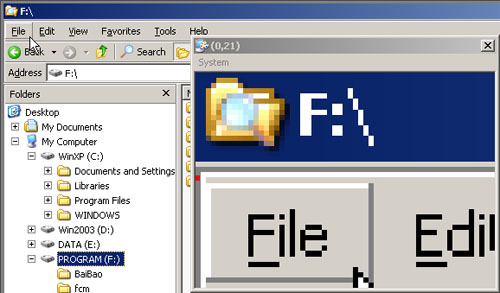
Software tools
This is a small program but yet powerful which allows you to capture any area of the screen just by a click & drag. The captured image is automatically placed on the system clipboard so that you can paste it into any more…
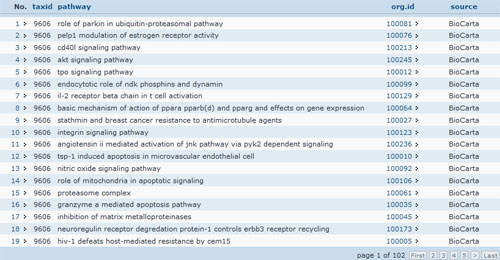
lntTblView table add-on
Introduction • Data table plays an important part in most websites, particularly the websites that are for data analysis and information retrieval. A data table add-on is a web application component that allows to render data on web page in table layout, supporting either sorting, filtering, paging or rearranging the data. A number of such plugins have been developed more…
Web model using MySql+PHP+Ajax
Due to the requirements of a number of website projects, I developed tnlmpweb, a web application model for websites using PHP and MySql, and running on Linux servers. Numerous web development issues have been taken into account in the model. The following issues are of last but not least of those I am mainly working more…